

Robert Hillman is a highly experienced City Quant, with a legendary record. He’s also a great mate of Bill! He’s come up with a great analysis of the UK’s Triple Lock Pension policy – looking at it as an option... It's well worth reading if you want to figure out smart policy vs political games.
Yesterday UK premier Andy Burnham made clear the 15-year-old promise to keep rising the UK basic pension is going to change. The government will reinvest the cash it saves in a new national care service.

What should markets be thinking about Andy Burnham’s conference speech yesterday? Gilts look to be giving him the benefit of doubt. Good in parts? He spoke well, proposed some positive policies and ideas, and gave an impression of a confident, positive politician set to deliver. The real issue isn’t just can Labour hold the nation steady and reverse years of negativity and low growth, but can any of the other parties do any better given the constrained state of the national finances?

Markets are worrying about a short-term interest-rate/inflation triggered correction, but something deeper may be approaching – a convergence between market, economic and political failures. It may be time to hedge against consensus expectations of “it will all be fine” and focus on factors like national resilience in terms of what nations thrive and which won’t!

In Bond Markets there is truth – and they are flashing warning signals a systemic market reset is on the cards. As rates rise, the relative prices of all financial assets will be impacted as the price of money normalises. It’s a period of transition with a high chance of an unstable reset, which is magnified by QE setting a false expectation of long-term low rates, and the growing realisation financial systems will suffer from political incompetence.

The UK is gradually waking up to the reality of very changed world. Its 40 years since we thought we’d won the Cold War. Now it’s apparent a new cycle of aggression has started, and just how woefully the West, and particularly the UK, is prepared. The Wargame, a new programme on SKY, explores just how swiftly the UK could be brought low in a conflict situation. It reinforces the message about the primacy of defence for governments and investment. If you want returns – they have to be protected.

At the back of all traders and investors minds is the question: “just how bad might the US Midterms be?" Relax. Things are never as bad as we fear, (though seldom as good as we hope). The mid-terms will be consequential, and no matter what the result are unlikely to do much to reverse the long-term decline of the US Treasury Market – the single most important market on the planet.
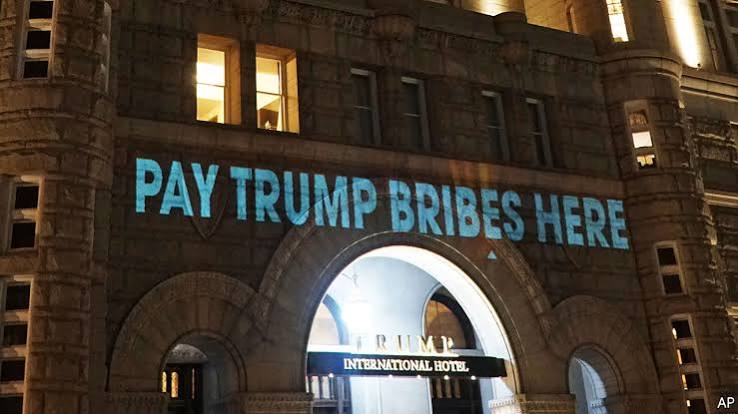
Kevin Warsh established a degree of credibility for the Fed and himself yesterday by hiking rates. The Fed is focused on fighting inflation – the best long-term option, but a short-term painful outcome for American voters. The coming electoral cycles in the USA, Europe and the UK will all highlight the power of money that’s driving the narrative. Big money from Crypto and Tech is driving political decisions. The electorate will suffer the consequences of policies set to elicit donations rather than foster long-term growth and economic security.

Keep your eyes on JD Vance. He is headed for a coronation. What will that mean for America and global markets? He’s not stupid, but many suspect hes is not his own man – he owes his successes to billionaire Mega-mind Peter Theil. Vance will lead the attack on the Progressive, Weirdo, Democratic Socialists, but even if he wins… what kind of market and economy might he inherit?

Friday is the 25th anniversary of 9/11. It was the worst of days. It changed the World forever. How has it changed America and what are the risks it raises for the future? Who won? America is a great and powerful nation – but is going through a painful period. What did Osama Bin Laden’s carefully calculated terror do to America’s future? The scars run deep. Who won?
Trump is the most unrestrained US president – yet is supported by the richest and most successful men in America even as we watch him upend everything the USA once stood for. What if Trump is just the front-man for a Regime that is changing the World - breaking traditional relationships and alliances to create a stronger America as China threatens to supersede it? Europe is struggling with the new rules of America’s primacy, the end of the Nato Era, the emergence of a new American hemisphere, and how nations should relate to the new Imperial USA. How these will all play in the Great Game to be Global Hegemon is as yet unclear, but the world is changing fast.

Disclaimer
This publication is protected by US, UK and International Copyright laws. All rights reserved. No License is granted except for the subscriber’s personal use. Rights will be pursued.
The Morning Porridge is not investment advice. It is market commentary based on discussions and information gathered from multiple sources believed to be reliable. No guarantee is given for its accuracy or completeness. It is not an offer to buy, sell or solicit investments or securities. The author may have a position in companies or institutions discussed in this commentary.

If you want to know what’s really happening and why.. welcome to the Porridge.
Financial Market Insights for Thinkers!
© Morning Porridge | All Rights Reserved | Website Design & Support by Orange Pixel