

Markets have a habit of watching the wrong things – which why they are repeatedly shocked by No-See-Ums. Perhaps, the real issue isn’t how economies miss growth or inflation targets, but how miserable or unhappy the electorate becomes? Traditional politics are failing in the democratic nations, while populism is set to create wider instabilities. Maybe it’s time to go “forest bathing” in the autumnal glory and focus on resiliency and satisfaction?
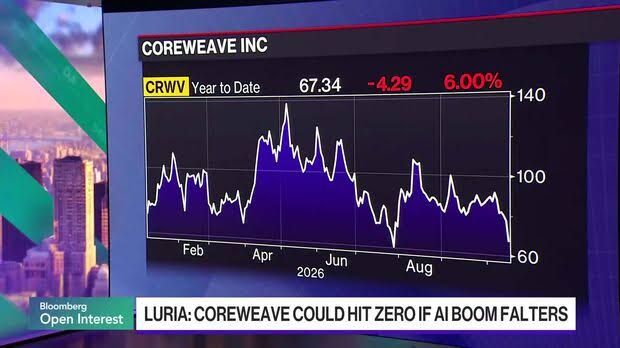
It’s been a bad week in the AI markets. Suddenly folk are waking up to the growing gap between inflated expectations and disappointing revenues, and the risks which include competition. It’s a pattern that reoccurs repeatedly in markets. The name to watch will be CoreWeave – illustrating what can go wrong when blithe assumptions about fantabulous upside ignore the rules of financial commonsense. A default or troubling rescue is on the cards.

Should Donald Trump have won the Nobel Prize in Economics? His groundbreaking work on instability and unpredictability, and how naked greed and connections can drive economic growth and prosperity exposes the fundamental weakness of liberal, woke societies. Should economies be driven by innovation and productivity, or by political connections and favour?

Just how much money is the AI boom going to make? No one really knows, but everyone is placing their bets. AI dominates the stock markets, but is beginning to worry many investors in terms of likely returns. While AI technologies are changing the world, what we see today may not be what we get tomorrow if new technologies emerge, and the current valuation metrics change. AI may be distracting us from real economic impacts elsewhere – like shipping costs.

The equity rally to yet new all-time-highs feels unconvincing. Expectations of inflationary pressures easing and a return to upside growth are not shared by bond markets which are concerned at signals of higher borrowing costs as governments fail to rein in fiscal programmes. A fall in oil prices will help but won’t solve anything.

The threat list to markets has suddenly expanded – plague, protests and increasing signs the AI boom is a damp squib. However, Sporting Investment remains a hot sector – which may require some tweaking as the full implications of the Man City financial scandal emerge. Durable sporting value requires sound corporate governance, managing the money to ensure competitive integrity, a growing and excited audience, and a clear flow of players from the grass-roots to the big leagues.

This morning something different. A review of Robin Wigglesworth’s new book, A Fabulous Debt, on the history of the Bond Markets. Great read and absorbing. It’s a broad brush explaining how bonds have evolved and developed. Bond markets guide far more than just interest rates – they are power, political stability, and can drive market instability. In Bonds there is truth. The book leave interested readers wanting to know more in terms of the consequences of the Bond Markets and mechanisms.

In Bond Markets there is truth – and they are flashing warning signals a systemic market reset is on the cards. As rates rise, the relative prices of all financial assets will be impacted as the price of money normalises. It’s a period of transition with a high chance of an unstable reset, which is magnified by QE setting a false expectation of long-term low rates, and the growing realisation financial systems will suffer from political incompetence.

The UK is gradually waking up to the reality of very changed world. Its 40 years since we thought we’d won the Cold War. Now it’s apparent a new cycle of aggression has started, and just how woefully the West, and particularly the UK, is prepared. The Wargame, a new programme on SKY, explores just how swiftly the UK could be brought low in a conflict situation. It reinforces the message about the primacy of defence for governments and investment. If you want returns – they have to be protected.

Global Bond yields remain… fragile. As the US breaches 5% 10-year yields, the UK is now slowing QT which should be market positive. It’s high time the Bank of England and the UK Treasury (which famously pretend the other doesn’t exist) cooperate on liability management to address the UK’s debt pile – which is actually in much better shape than the right-wing press would have you believe.

Disclaimer
This publication is protected by US, UK and International Copyright laws. All rights reserved. No License is granted except for the subscriber’s personal use. Rights will be pursued.
The Morning Porridge is not investment advice. It is market commentary based on discussions and information gathered from multiple sources believed to be reliable. No guarantee is given for its accuracy or completeness. It is not an offer to buy, sell or solicit investments or securities. The author may have a position in companies or institutions discussed in this commentary.

If you want to know what’s really happening and why.. welcome to the Porridge.
Financial Market Insights for Thinkers!
© Morning Porridge | All Rights Reserved | Website Design & Support by Orange Pixel