
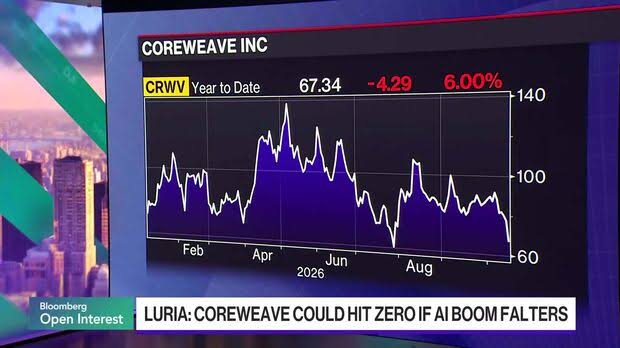
It’s been a bad week in the AI markets. Suddenly folk are waking up to the growing gap between inflated expectations and disappointing revenues, and the risks which include competition. It’s a pattern that reoccurs repeatedly in markets. The name to watch will be CoreWeave – illustrating what can go wrong when blithe assumptions about fantabulous upside ignore the rules of financial commonsense. A default or troubling rescue is on the cards.

Just how much money is the AI boom going to make? No one really knows, but everyone is placing their bets. AI dominates the stock markets, but is beginning to worry many investors in terms of likely returns. While AI technologies are changing the world, what we see today may not be what we get tomorrow if new technologies emerge, and the current valuation metrics change. AI may be distracting us from real economic impacts elsewhere – like shipping costs.

The threat list to markets has suddenly expanded – plague, protests and increasing signs the AI boom is a damp squib. However, Sporting Investment remains a hot sector – which may require some tweaking as the full implications of the Man City financial scandal emerge. Durable sporting value requires sound corporate governance, managing the money to ensure competitive integrity, a growing and excited audience, and a clear flow of players from the grass-roots to the big leagues.

At the back of all traders and investors minds is the question: “just how bad might the US Midterms be?" Relax. Things are never as bad as we fear, (though seldom as good as we hope). The mid-terms will be consequential, and no matter what the result are unlikely to do much to reverse the long-term decline of the US Treasury Market – the single most important market on the planet.

Keep your eyes on JD Vance. He is headed for a coronation. What will that mean for America and global markets? He’s not stupid, but many suspect hes is not his own man – he owes his successes to billionaire Mega-mind Peter Theil. Vance will lead the attack on the Progressive, Weirdo, Democratic Socialists, but even if he wins… what kind of market and economy might he inherit?
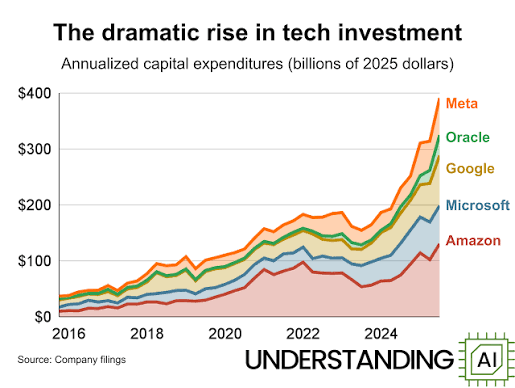
The factor that’s enabled the extraordinary success and longevity of the AI bubble has been the willingness of the markets to finance it. What happens if the liquidity machine driving AI were to suddenly stop? As the limits of bond markets, private credit, and using insurance companies to park risk, become increasingly apparent – what would a liquidity event do to current markets? Ouch!
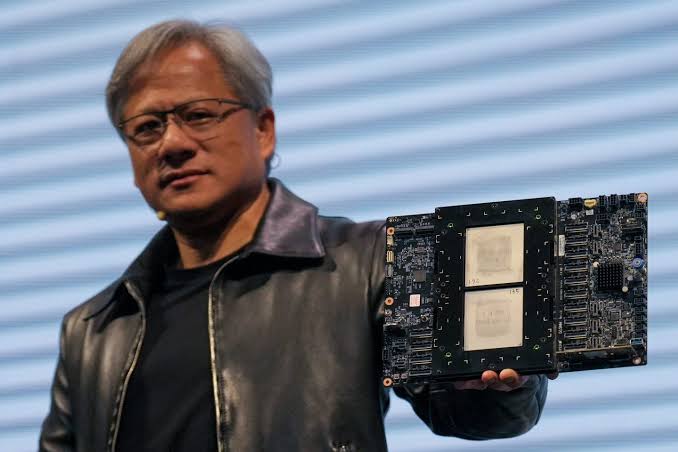
The AI infrastructure build out already dominates credit market funding. Now Nvidia will effectively securitise its chips to its market though a panel of private capital markets firms that lend it credibility. The worry is complex and appealing deal structures will simply hide the risks inherent in AI – and increase the likelihood of a correlated crash when something inevitably breaks.

The UK has 6 relatively new “mega” Local Government Pension Schemes. They are investing in the UK and globally. But are they focused on the right things? Less than 10% of their significant PE assets are managed by UK based firms. They are giving their money to US firms – further deepening the negative feedback loop diminishing UK capital markets.

The success and depth of US capital markets to finance entrepreneurs and successive tech revolutions has been extraordinary – fuelling the exceptionalism of the US economy. In contrast, the UK is more risk adverse towards start-up opportunities. That’s largely cultural, a reflection of the more mature, later-stage British Economy. What will happen when the US economy is also past its top, and following the UK into maturity?

I have no interest in golf – it’s a good walk spoilt. But the rumoured collapse of the rogue LIV Golf Tour, and the disinterest fans are showing in attending Trump’s price-gouging Football World Cup, may be hints the sports investment bubble is about to burst. If it does, it could trigger a confidence wobble across private capital. It could also spell opportunity!

Disclaimer
This publication is protected by US, UK and International Copyright laws. All rights reserved. No License is granted except for the subscriber’s personal use. Rights will be pursued.
The Morning Porridge is not investment advice. It is market commentary based on discussions and information gathered from multiple sources believed to be reliable. No guarantee is given for its accuracy or completeness. It is not an offer to buy, sell or solicit investments or securities. The author may have a position in companies or institutions discussed in this commentary.

If you want to know what’s really happening and why.. welcome to the Porridge.
Financial Market Insights for Thinkers!
© Morning Porridge | All Rights Reserved | Website Design & Support by Orange Pixel