

Elon Musk is the richest man in history. With great wealth comes great power and influence. How wisely is Musk wielding that power? Switching off Starlink in Ukraine, threatening Europe with “devastating consequences” on satellite broadband, and whatever deals he doing on the regulation of his companies all beg closer examination. He raises questions about his accountability, and whose interests he serves.

French political instability and it’s looming fiscal crisis will distract and delay the European project of a shift towards “strategic unity” in the face of a) the immediate security threats from Russia, and b) the long-term geopolitical shift towards China at the end of the Transatlantic American age. How Europe responds to the growing French threat could determine its economic outlook for decades.
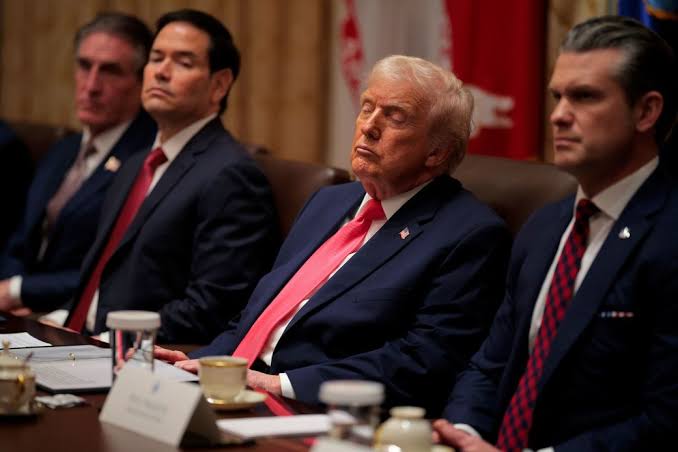
The US economy looks rosy – if you are looking at the fantabulous promises of the Stock Market. The reality is very different. The scale of the $40 trillion National Debt is a problem that will not just go away and puts substantial limits on how the US can respond to any new economic or conflict crisis without risking massive inflation. Underlying the scale of the debt is not just poor spending decisions, but tax cuts that have accelerated the debt crisis.
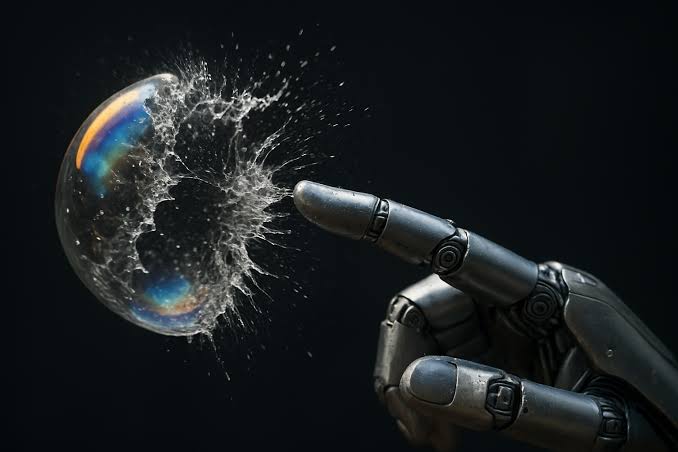
Just how much money is the AI boom going to make? No one really knows, but everyone is placing their bets. AI dominates the stock markets, but is beginning to worry many investors in terms of likely returns. While AI technologies are changing the world, what we see today may not be what we get tomorrow if new technologies emerge, and the current valuation metrics change. AI may be distracting us from real economic impacts elsewhere – like shipping costs.

Defence has become the hot new sector, but investors need to understand the geopolitical reality, military requirements, the need for adaptation, and how the battlespace is changing. Defence needs to connect capital to warfighting capabilities that can be deployed now, adapted swiftly, and manufactured in unprecedented volume. The most effective way for the West to win is to demonstrate the will and ability to do so – which is the most likely way to deter our enemies from attacking.

Markets are worrying about a short-term interest-rate/inflation triggered correction, but something deeper may be approaching – a convergence between market, economic and political failures. It may be time to hedge against consensus expectations of “it will all be fine” and focus on factors like national resilience in terms of what nations thrive and which won’t!

In Bond Markets there is truth – and they are flashing warning signals a systemic market reset is on the cards. As rates rise, the relative prices of all financial assets will be impacted as the price of money normalises. It’s a period of transition with a high chance of an unstable reset, which is magnified by QE setting a false expectation of long-term low rates, and the growing realisation financial systems will suffer from political incompetence.

Sailing is an easy way to distract me. Although water activities are thriving, the traditional sailing world is undergoing enormous change as a result of economic pressure and shifting societal trends. It’s only a tiny part of the overall economic picture but sailing hints at how the world may look in the future as affordability, economic confidence, and income inequalities start to divide society further into haves and have-not camps.
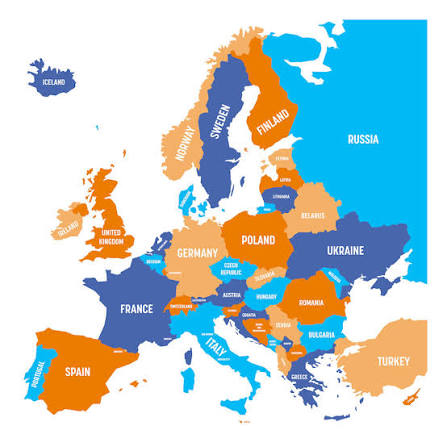
Europe is a diverse, culturally rich and fascinating continent but increasingly looks an economic basket case facing economic and demographic decline. Its suffering economic PTSD after successive shocks in Banking, Sovereign Debt and now Energy. Now it’s being squeezed between an unreliable USA and China’s proxy, Russia. Maybe that’s the challenge it needs?

There is a rising kerfuffle around the safety of AI. There are good reasons to be fearful. The leading AI Tech Lords now acknowledge there are serious dangers – but AI is now a strategic resource! Thus, there are games of national and company self-interest, and geopolitics all at play in terms of how to harness it. What it all means for markets is still unclear – but some reassessment of the risks should be considered. The horses are running and the stable door is wide open.

Disclaimer
This publication is protected by US, UK and International Copyright laws. All rights reserved. No License is granted except for the subscriber’s personal use. Rights will be pursued.
The Morning Porridge is not investment advice. It is market commentary based on discussions and information gathered from multiple sources believed to be reliable. No guarantee is given for its accuracy or completeness. It is not an offer to buy, sell or solicit investments or securities. The author may have a position in companies or institutions discussed in this commentary.

If you want to know what’s really happening and why.. welcome to the Porridge.
Financial Market Insights for Thinkers!
© Morning Porridge | All Rights Reserved | Website Design & Support by Orange Pixel