
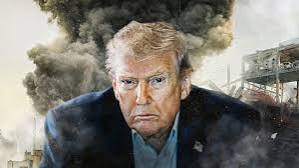
Ukraine was stabbed in the back yesterday. Its defenders found their access to Starshield and Intel on incoming missile strikes suddenly blocked. Trump is saying nothing – but it's increasingly clear the orders came from POTUS. Trump is furious that Zelensky refuses to surrender Ukraine to his good chum Putin. It represents a new nadir of the Trump presidency.

Should Donald Trump have won the Nobel Prize in Economics? His groundbreaking work on instability and unpredictability, and how naked greed and connections can drive economic growth and prosperity exposes the fundamental weakness of liberal, woke societies. Should economies be driven by innovation and productivity, or by political connections and favour?
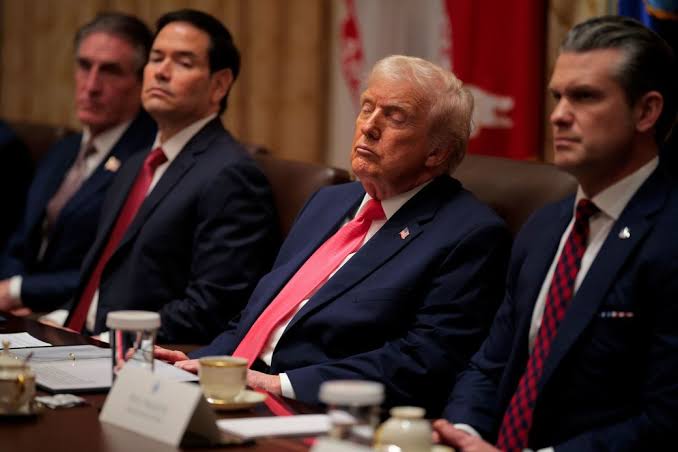
The US economy looks rosy – if you are looking at the fantabulous promises of the Stock Market. The reality is very different. The scale of the $40 trillion National Debt is a problem that will not just go away and puts substantial limits on how the US can respond to any new economic or conflict crisis without risking massive inflation. Underlying the scale of the debt is not just poor spending decisions, but tax cuts that have accelerated the debt crisis.

The current summit between Trump and Xi will likely become little more than a footnote in the history of the end of one economic empire and the emergence of the next. Xi has patience and has visited DC to let Trump do his thing, while he seeks time and stability to firmly establish China’s dominance. He is guided by the Sun Tzu dictum “Never interrupt your enemy while they are making mistakes.”

At the back of all traders and investors minds is the question: “just how bad might the US Midterms be?" Relax. Things are never as bad as we fear, (though seldom as good as we hope). The mid-terms will be consequential, and no matter what the result are unlikely to do much to reverse the long-term decline of the US Treasury Market – the single most important market on the planet.
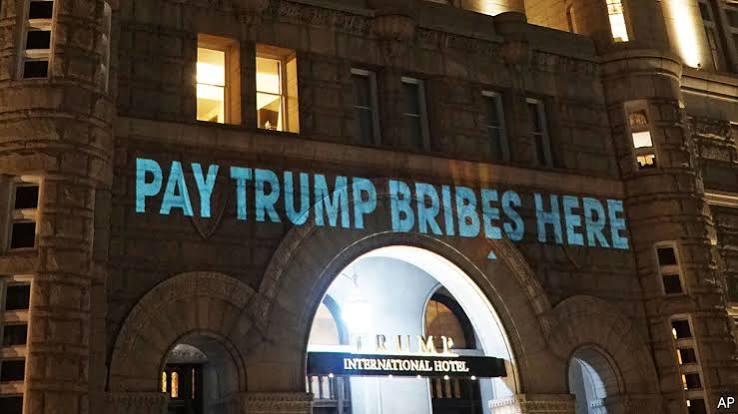
Kevin Warsh established a degree of credibility for the Fed and himself yesterday by hiking rates. The Fed is focused on fighting inflation – the best long-term option, but a short-term painful outcome for American voters. The coming electoral cycles in the USA, Europe and the UK will all highlight the power of money that’s driving the narrative. Big money from Crypto and Tech is driving political decisions. The electorate will suffer the consequences of policies set to elicit donations rather than foster long-term growth and economic security.
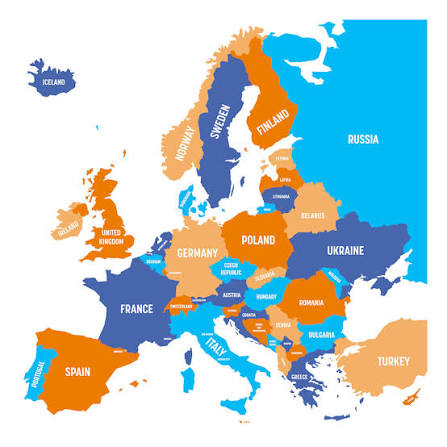
Europe is a diverse, culturally rich and fascinating continent but increasingly looks an economic basket case facing economic and demographic decline. Its suffering economic PTSD after successive shocks in Banking, Sovereign Debt and now Energy. Now it’s being squeezed between an unreliable USA and China’s proxy, Russia. Maybe that’s the challenge it needs?

Keep your eyes on JD Vance. He is headed for a coronation. What will that mean for America and global markets? He’s not stupid, but many suspect hes is not his own man – he owes his successes to billionaire Mega-mind Peter Theil. Vance will lead the attack on the Progressive, Weirdo, Democratic Socialists, but even if he wins… what kind of market and economy might he inherit?

Friday is the 25th anniversary of 9/11. It was the worst of days. It changed the World forever. How has it changed America and what are the risks it raises for the future? Who won? America is a great and powerful nation – but is going through a painful period. What did Osama Bin Laden’s carefully calculated terror do to America’s future? The scars run deep. Who won?
The coming year is likely to be shaped by higher inflation from energy and El Nino, rising interest rates, “policy-mistake” risks, and revaluation risks as capital markets adapt to rate normalisation. Looming over it all be political noise. Understanding where we are, how we got here and what happens next will be critical.

Disclaimer
This publication is protected by US, UK and International Copyright laws. All rights reserved. No License is granted except for the subscriber’s personal use. Rights will be pursued.
The Morning Porridge is not investment advice. It is market commentary based on discussions and information gathered from multiple sources believed to be reliable. No guarantee is given for its accuracy or completeness. It is not an offer to buy, sell or solicit investments or securities. The author may have a position in companies or institutions discussed in this commentary.

If you want to know what’s really happening and why.. welcome to the Porridge.
Financial Market Insights for Thinkers!
© Morning Porridge | All Rights Reserved | Website Design & Support by Orange Pixel