

Markets have a habit of watching the wrong things – which why they are repeatedly shocked by No-See-Ums. Perhaps, the real issue isn’t how economies miss growth or inflation targets, but how miserable or unhappy the electorate becomes? Traditional politics are failing in the democratic nations, while populism is set to create wider instabilities. Maybe it’s time to go “forest bathing” in the autumnal glory and focus on resiliency and satisfaction?

French political instability and it’s looming fiscal crisis will distract and delay the European project of a shift towards “strategic unity” in the face of a) the immediate security threats from Russia, and b) the long-term geopolitical shift towards China at the end of the Transatlantic American age. How Europe responds to the growing French threat could determine its economic outlook for decades.

What should markets be thinking about Andy Burnham’s conference speech yesterday? Gilts look to be giving him the benefit of doubt. Good in parts? He spoke well, proposed some positive policies and ideas, and gave an impression of a confident, positive politician set to deliver. The real issue isn’t just can Labour hold the nation steady and reverse years of negativity and low growth, but can any of the other parties do any better given the constrained state of the national finances?

At the back of all traders and investors minds is the question: “just how bad might the US Midterms be?" Relax. Things are never as bad as we fear, (though seldom as good as we hope). The mid-terms will be consequential, and no matter what the result are unlikely to do much to reverse the long-term decline of the US Treasury Market – the single most important market on the planet.

The coming year is likely to be shaped by higher inflation from energy and El Nino, rising interest rates, “policy-mistake” risks, and revaluation risks as capital markets adapt to rate normalisation. Looming over it all be political noise. Understanding where we are, how we got here and what happens next will be critical.

Narratives are what drive stock markets. Robots are seen as a massive multi-trillion-dollar Total Addressable Market – with strategic and social implications that will utterly change economies. Musk expects to sell millions every year. The reality is likely to be very different – robotics and society will evolve and probably end up unlike anything we envisage today.
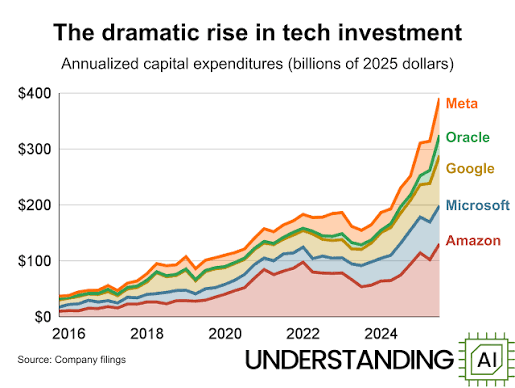
The factor that’s enabled the extraordinary success and longevity of the AI bubble has been the willingness of the markets to finance it. What happens if the liquidity machine driving AI were to suddenly stop? As the limits of bond markets, private credit, and using insurance companies to park risk, become increasingly apparent – what would a liquidity event do to current markets? Ouch!
The real strength of the US economy is not its military or the dollar’s exorbitant privilege, but the depth of its capital markets - which have financed the most successful economy in history. The risk is not how large the US deficit is, but how sustainable are America’s capital markets to mounting fiscal pressures, market shifts and geopolitical forces?

The AI market has been diving business expectations and markets – everyone believes it will deliver a growth, productivity and profit revolution across the global economy. What if it doesn’t? What if it’s not a leap forward, but just a step-change?
2026 has been an interesting year thus far. A number of themes including AI, Geopolitics, Debt and Innovation have driven the flow of markets, which have very high upside expectations and few worries about downside risks. I would remind readers of Blain Mantra No 1: “The markets have but one objective: to inflict the maximum amount of pain on the maximum number of participants”. Hey-Ho, and on we go...

Disclaimer
This publication is protected by US, UK and International Copyright laws. All rights reserved. No License is granted except for the subscriber’s personal use. Rights will be pursued.
The Morning Porridge is not investment advice. It is market commentary based on discussions and information gathered from multiple sources believed to be reliable. No guarantee is given for its accuracy or completeness. It is not an offer to buy, sell or solicit investments or securities. The author may have a position in companies or institutions discussed in this commentary.

If you want to know what’s really happening and why.. welcome to the Porridge.
Financial Market Insights for Thinkers!
© Morning Porridge | All Rights Reserved | Website Design & Support by Orange Pixel