

French political instability and it’s looming fiscal crisis will distract and delay the European project of a shift towards “strategic unity” in the face of a) the immediate security threats from Russia, and b) the long-term geopolitical shift towards China at the end of the Transatlantic American age. How Europe responds to the growing French threat could determine its economic outlook for decades.

The current summit between Trump and Xi will likely become little more than a footnote in the history of the end of one economic empire and the emergence of the next. Xi has patience and has visited DC to let Trump do his thing, while he seeks time and stability to firmly establish China’s dominance. He is guided by the Sun Tzu dictum “Never interrupt your enemy while they are making mistakes.”
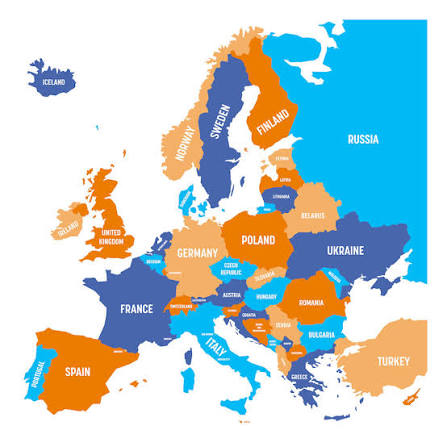
Europe is a diverse, culturally rich and fascinating continent but increasingly looks an economic basket case facing economic and demographic decline. Its suffering economic PTSD after successive shocks in Banking, Sovereign Debt and now Energy. Now it’s being squeezed between an unreliable USA and China’s proxy, Russia. Maybe that’s the challenge it needs?

In the past 15 years the US economy has left Europe in the rear-view mirror. While America booms, Europe appears to be flatlining. The question is why? Americans say it’s entirely Europe’s fault: bad policies, failing politics, and lack of unity. However, the consequences of the (as yet unresolved) European Sovereign debt crisis triggered by the Global Financial Crisis of 2008 was the speedbump.
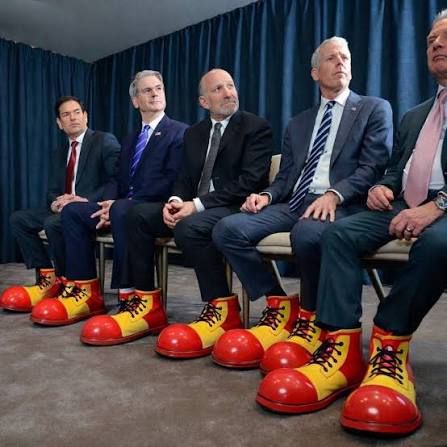
NATO has been the core of the Western Alliance and Transatlantic Economy. The men in the ill-fitting Florsheim dress shoes have broken it. What will follow is uncertain, but will clearly impact global markets and geopolitics to an enormous degree. The deepening Atlantic rift puts the need for European defence, sovereignty and resilience right at the top of the priority list.

England will take a confidence boost from the World Cup win vs Mexico. The Russians will be furious – their war plan requires The West’s resilience and pride is weakened through disinformation and instability. Countering Cognitive Warfare requires the acknowledgement it’s happening, that we fight it, and acknowledge our strengths and weaknesses, and that unity wins!

Compare and contrast the USA and Britain. The new country and the old. Our problems are not in our inventiveness, our skills or our people, but in how our societies work. We suffer from Politics that don’t govern, Businesses that don’t share, and Bureaucracies that don’t deliver. These are problems of late-stage democracies in need of a reset. Politicians keep promising – maybe one day one of them will actually make changes!
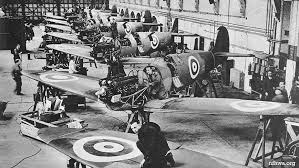
Investing in defence was a sadly neglected skillset for many years following the end of the Cold War. Defence primes became utility like seeking to preserve margins as real budgets declined on the peace-dividend. The War in Ukraine has highlighted many things, but critically that what the Primes are selling isn’t what’s going to win the next War. To invest in defence – you need insights into the future of the battlespace.

Today is the 81st anniversary of VE Day – the end of the Second World War in Europe. Markets are fixated on rising stock prices and probably won’t notice. Complacency is the danger. The Wars in Ukraine and Iran highlight success and failure and point towards a very different future world than the expected one. There are massive implications for markets – but that’s a tomorrow problem for markets focused on “now”.

Viktor Orban was a curious beast. A pragmatist and a populist who tried to play off Moscow, Washington and Brussels. Hungary is not yet solved, but it could be a transformational moment for Europe in terms of Populism and Unity.

Disclaimer
This publication is protected by US, UK and International Copyright laws. All rights reserved. No License is granted except for the subscriber’s personal use. Rights will be pursued.
The Morning Porridge is not investment advice. It is market commentary based on discussions and information gathered from multiple sources believed to be reliable. No guarantee is given for its accuracy or completeness. It is not an offer to buy, sell or solicit investments or securities. The author may have a position in companies or institutions discussed in this commentary.

If you want to know what’s really happening and why.. welcome to the Porridge.
Financial Market Insights for Thinkers!
© Morning Porridge | All Rights Reserved | Website Design & Support by Orange Pixel