
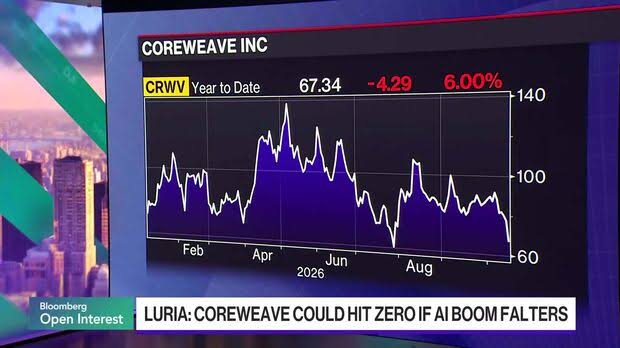
It’s been a bad week in the AI markets. Suddenly folk are waking up to the growing gap between inflated expectations and disappointing revenues, and the risks which include competition. It’s a pattern that reoccurs repeatedly in markets. The name to watch will be CoreWeave – illustrating what can go wrong when blithe assumptions about fantabulous upside ignore the rules of financial commonsense. A default or troubling rescue is on the cards.

Just how much money is the AI boom going to make? No one really knows, but everyone is placing their bets. AI dominates the stock markets, but is beginning to worry many investors in terms of likely returns. While AI technologies are changing the world, what we see today may not be what we get tomorrow if new technologies emerge, and the current valuation metrics change. AI may be distracting us from real economic impacts elsewhere – like shipping costs.

There is a rising kerfuffle around the safety of AI. There are good reasons to be fearful. The leading AI Tech Lords now acknowledge there are serious dangers – but AI is now a strategic resource! Thus, there are games of national and company self-interest, and geopolitics all at play in terms of how to harness it. What it all means for markets is still unclear – but some reassessment of the risks should be considered. The horses are running and the stable door is wide open.

If there is a 10% chance AI is going to kill us all, then that’s probably bad news for bond markets. There are a lots of things that threaten us, but fortunately most of them are quite unlikely. A 1 in 10 chance we’re all toast is not. Global markets will probably choose to look the other way, but how would your own investment decisions change if you knew the Terminator is about to knock on the door?

Narratives are what drive stock markets. Robots are seen as a massive multi-trillion-dollar Total Addressable Market – with strategic and social implications that will utterly change economies. Musk expects to sell millions every year. The reality is likely to be very different – robotics and society will evolve and probably end up unlike anything we envisage today.
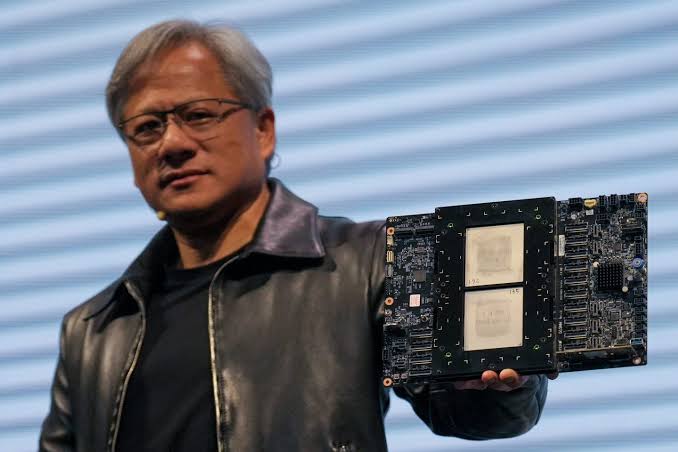
The AI infrastructure build out already dominates credit market funding. Now Nvidia will effectively securitise its chips to its market though a panel of private capital markets firms that lend it credibility. The worry is complex and appealing deal structures will simply hide the risks inherent in AI – and increase the likelihood of a correlated crash when something inevitably breaks.

The AI market has been diving business expectations and markets – everyone believes it will deliver a growth, productivity and profit revolution across the global economy. What if it doesn’t? What if it’s not a leap forward, but just a step-change?

Are we about to have an Emperor’s New Clothes moment and a return to sane valuations? The Tech markets create enormous real value and growth across economies, but like every other bubble in financial history they are hyped to high heaven. In the short run there is money to be made playing the game. In the long run; what is real and what is not matters. The trick is to exit the short-term game before the long run outcomes are apparent to everyone.

There were a number of “Moments” over the Weekend. A Peace Deal in the Gulf was inevitable – but we will see energy supply chains slowly normalise and lower inflationary expectations. Equally important is the US Government switching off Anthropic’s most powerful AI models. Collectively, these two events could have enormous consequences in terms of global power and hegemony.

Markets can’t wait for the Iran war to end – so they can get back to speculating trillions on the AI revolution. The hyperscalers expect to reap monopoly scale rents from owning AI closed-weight models and the digital infrastructure of datacentres and chips. But what if households can build their own AI capabilities cheaper and more effectively? Pop!

Disclaimer
This publication is protected by US, UK and International Copyright laws. All rights reserved. No License is granted except for the subscriber’s personal use. Rights will be pursued.
The Morning Porridge is not investment advice. It is market commentary based on discussions and information gathered from multiple sources believed to be reliable. No guarantee is given for its accuracy or completeness. It is not an offer to buy, sell or solicit investments or securities. The author may have a position in companies or institutions discussed in this commentary.

If you want to know what’s really happening and why.. welcome to the Porridge.
Financial Market Insights for Thinkers!
© Morning Porridge | All Rights Reserved | Website Design & Support by Orange Pixel