

NATO has been the core of the Western Alliance and Transatlantic Economy. The men in the ill-fitting Florsheim dress shoes have broken it. What will follow is uncertain, but will clearly impact global markets and geopolitics to an enormous degree. The deepening Atlantic rift puts the need for European defence, sovereignty and resilience right at the top of the priority list.

2026 has been an interesting year thus far. A number of themes including AI, Geopolitics, Debt and Innovation have driven the flow of markets, which have very high upside expectations and few worries about downside risks. I would remind readers of Blain Mantra No 1: “The markets have but one objective: to inflict the maximum amount of pain on the maximum number of participants”. Hey-Ho, and on we go...

The success and depth of US capital markets to finance entrepreneurs and successive tech revolutions has been extraordinary – fuelling the exceptionalism of the US economy. In contrast, the UK is more risk adverse towards start-up opportunities. That’s largely cultural, a reflection of the more mature, later-stage British Economy. What will happen when the US economy is also past its top, and following the UK into maturity?

Western economies succeed because bond and stock markets work together. Bond markets enable governments to finance the optimal conditions for invention and innovation, enabling growth and prosperity. Sometimes Markets fall out of line, while Politics are ruled by votes rather than experience – and that’s where the wobbles start to multiply.

The Pope has published an Encyclical warning on the risks of an ill-considered rush towards AI. It comes at a time when AI is driving the markets, and AI leaders are whispering in Trump’s ear that regulation will destroy America’s lead. It’s not just the risk we will be turned to grey gloop by AI overlords, but how jobs, the economy, inequality and social equality are at all in play.
The markets are on a tear convinced normalisation is around the next corner. Yet they ignore the reality the Iran war has done significant damage to the global outlook – even if Tehran and Washington kiss and make up tomorrow. I don’t claim to understand the madness of markets and their ability to keep fooling themselves, but I do follow economic history and how events change outcomes.

Stock markets are on a buzz. Central banks are expected to ease immediately. Joy unlimited. What war? Peace in the Middle East! Really? There are none so blind as salesmen wanting to talk a market higher.

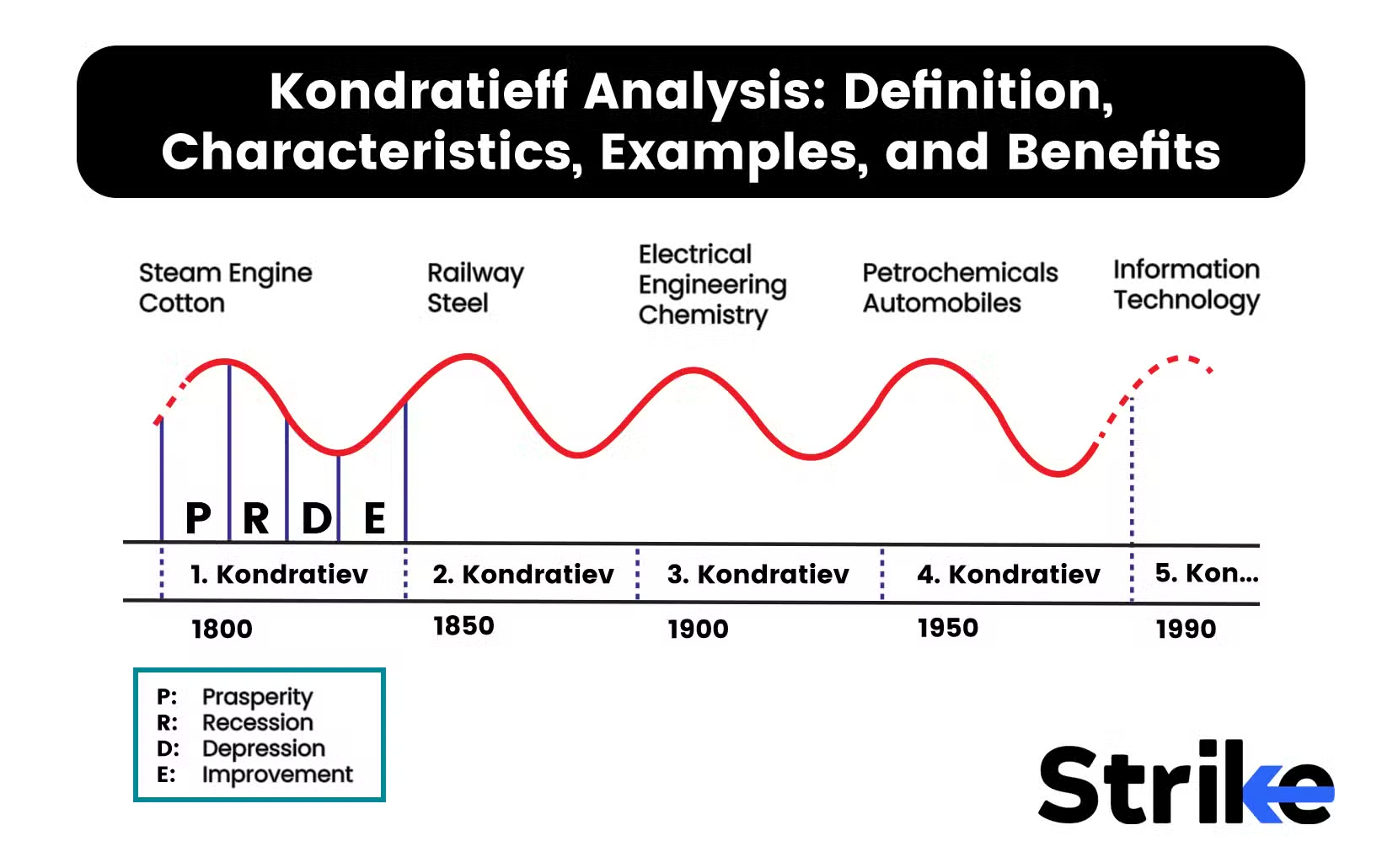
We think we know the patterns – how markets resonate and repeat. But…. Do we? Every so often the Earth’s polarity shifts – but its never happened in recorded history so we don’t really know. Every so often the World’s basis changes. Make merry while we can. Enjoy what is real. The rest is just numbers. You are measured not by the digits on your bank balance, but by the numbers of your friends.
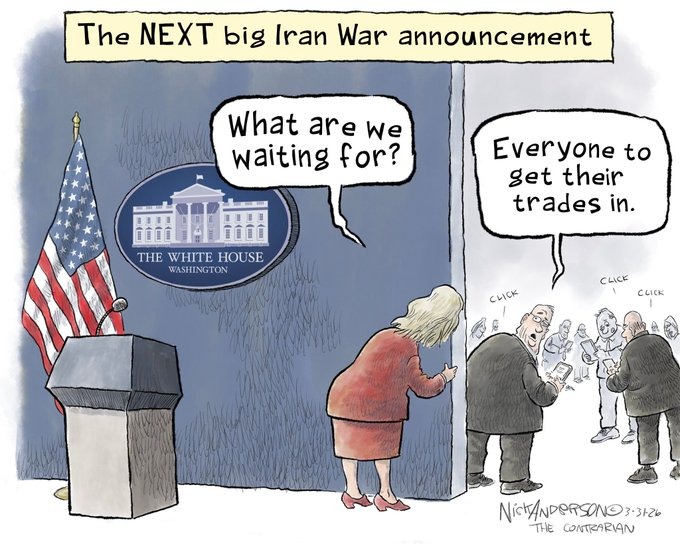
Oh dear. Last night’s explanation of the War did not go well. What changed except a more unstable and fractured global economy and rising trade, supply chain and conflict risks? When markets are priced for perfection – what happens when reality intrudes. I see bad things arising.

Suddenly global markets are reeling – waking up to the reality of the unwinnable Iran War. What will a dramatic shift in sentiment mean for stocks, bonds and commodities as stagflation beckons, and Trump finds himself isolated? There is a growing risk of a liquidity shock to global markets.

Disclaimer
This publication is protected by US, UK and International Copyright laws. All rights reserved. No License is granted except for the subscriber’s personal use. Rights will be pursued.
The Morning Porridge is not investment advice. It is market commentary based on discussions and information gathered from multiple sources believed to be reliable. No guarantee is given for its accuracy or completeness. It is not an offer to buy, sell or solicit investments or securities. The author may have a position in companies or institutions discussed in this commentary.

If you want to know what’s really happening and why.. welcome to the Porridge.
Financial Market Insights for Thinkers!
© Morning Porridge | All Rights Reserved | Website Design & Support by Orange Pixel