

Are we about to have an Emperor’s New Clothes moment and a return to sane valuations? The Tech markets create enormous real value and growth across economies, but like every other bubble in financial history they are hyped to high heaven. In the short run there is money to be made playing the game. In the long run; what is real and what is not matters. The trick is to exit the short-term game before the long run outcomes are apparent to everyone.

The AI revolution is very real, but the froth around its valuations is not. The real value of AI won’t be in how hyperscalers establish themselves to “rent” us AI services, but how the real economy reacts to the opportunity, and smart firms learn to innovate it to make their businesses better and more profitable. The real upside is immense.

This year is shaping up to be a big one for IPOs, but just how sustainable will the market be if the speculative froth driving valuations dissipates? SpaceX will be the big one – it is a truly extraordinary firm, but after the noise, what’s it really worth?

What’s not to like about Panto? Saxo Bank’s excellent Outrageous Predictions for 2026 are out.. Lets dig into why Sir Keir Starmer might consider rejoining Europe to peeve Nigel Farage, how China will dominate trade through Tech and a gold-linked Yuan, and why SpaceX is unlikely to be the first $1 trillion IPO.

So much to worry about. Stop. Why bother? What’s not to like about short-term markets. Nvidia is selling more and more and more chips, SpaceX half-circumnavigated the planet, and US Treasuries care not a jot about Fed Independence. Give me another puff of whatever these guys are smoking!
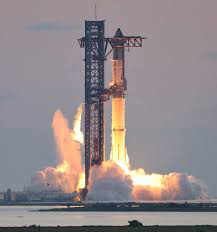
It hurts to admit, but Elon Musk played a blinder during the US election. Just how much more could he deliver to the US economy as part of the Trump administration? Disrupting entrenched US bureaucracies and the military-industrial complex could be transformational. I have a great business idea for him!

Rumours Starlink could be 2024’s big IPO are in circulation, but hype and the Musk effect have inflated the value of Space commercialisation and the financial actuality. What are they really worth?

The failure of Virgin Orbit to achieve the first successful satellite launch from the UK is disappointing. It puts the opportunities for space business under the spotlight. There is money to be made, but how, and by whom?


Disclaimer
This publication is protected by US, UK and International Copyright laws. All rights reserved. No License is granted except for the subscriber’s personal use. Rights will be pursued.
The Morning Porridge is not investment advice. It is market commentary based on discussions and information gathered from multiple sources believed to be reliable. No guarantee is given for its accuracy or completeness. It is not an offer to buy, sell or solicit investments or securities. The author may have a position in companies or institutions discussed in this commentary.

If you want to know what’s really happening and why.. welcome to the Porridge.
Financial Market Insights for Thinkers!
© Morning Porridge | All Rights Reserved | Website Design & Support by Orange Pixel